
2026 Medical Billing Updates Your Team Needs to Know

Running a medical practice is expensive, and costs keep rising. In 2025, operating expenses jumped 11.1% compared to 2024, driven by staffing, supplies, technology, and compliance (MGMA). This makes medical billing updates critical every year.
In this blog, we’ll break down the most important medical billing updates for 2026 and provide actionable steps to help your billing team stay ahead.
Key Takeaways:
Medical practice operating costs continue to rise, making accurate and compliant billing more critical than ever.
2026 billing updates will affect reimbursement, documentation, coding, and compliance workflows.
Small billing errors can lead to delayed payments, denials, audits, and lost revenue.
Proactive preparation helps billing teams adapt faster and protect cash flow.
Strong revenue cycle management is essential to offset rising expenses and tighter reimbursements.
Inside this article, you’ll learn about:

Why do medical billing rules change

How medical billing updates impact each other

Key 2026 medical billing updates

Preparing your team for medical billing changes

How to improve revenue cycle management
Jump to section
Jump to section
Jump to section
Jump to section
Jump to section
Why Medical Billing Rules Change
The first step in preparing for annual medical billing updates is to understand why these changes occur. Regulatory bodies, like CMS, issue updates, guidance, or new rules when discrepancies or inefficiencies are identified. Billing rules exist to protect revenue, reduce denials, ensure compliance, and keep your practice running smoothly.
Medical billing rules directly impact these crucial areas of your practice:
Revenue: Using outdated codes or missing fee schedule updates can lead to underpayment or claim denials.
Compliance: Incorrect documentation or coding exposes your practice to audits and penalties.
Efficiency: New rules, such as expanded telehealth requirements and specialty-specific updates, can disrupt workflows if not anticipated.
With so much at stake, the next step is understanding how payment rules and service codes must align to ensure proper reimbursement.
How Medical Billing Changes Impact Each Other
1. The Medicare Physician Fee Schedule (PFS)
2. Critical coding updates (ICD-10, CPT, HCPCS)
Medicare PFS determines how much Medicare reimburses for each physician or outpatient service. It considers:
RVUs (Relative Value Units) for physician effort, practice costs, and malpractice
Telehealth adjustments
Efficiency modifiers and geographic variations
At the same time, critical coding updates document the services and diagnoses performed, including:
Services provided (CPT/HCPCS)
Diagnosis codes (ICD-10)
New, revised, or deleted codes
Specialty-specific rules
Together, PFS and coding updates form a system where payment and documentation align. PFS sets the reimbursement, while accurate coding supports medical necessity.
Key 2026 Medical Billing Updates
For 2026, the CMS finalized several significant updates to the Medicare Physician Fee Schedule (PFS) and related programs, including:

RVUs and payment rates.
Adjusted to reflect physician effort and practice costs.

Telehealth billing.
Expanded reimbursable services with updated coding requirements.

Efficiency adjustments.
Reduced payment for some services based on workflow assumptions.

Documentation & audits.
Stricter enforcement requires complete, accurate records.
Meanwhile, critical coding updates include:
ICD-10-CM. Has 614 new codes, 12 deletions, 642 modifications (effective Oct 1, 2025).
CPT codes. Has 288 new codes, 46 revisions, and 84 deletions for new procedures and technologies.
HCPCS Level II. Has New “A” codes for precise documentation, e.g., urinary catheters.
Specialty-specific rules. More complex coding for cardiology, OB-GYN, mental health, and other fields.
Technology & automation. Web-based platforms with real-time analytics reduce denials and improve efficiency.
Documentation “golden rule”. Complete, accurate, timely notes are essential to support medical necessity and prevent denials.
Failure to implement these updates correctly can lead to denied claims, revenue loss, and compliance issues.
How to Prepare Your Medical Billing Team for Changes
Without proactive measures, practices risk denied claims, lost revenue, and compliance issues. Here’s how focusing on four key areas can help your billing team adapt smoothly.
By addressing these key areas, your billing team can reduce denials, protect revenue, and maintain compliance.
But not all medical practices work the same. Even with a strong internal team, many find it valuable to partner with a Revenue Cycle Management (RCM) expert.
An experienced provider like Synapse can complement their staff by ensuring accurate coding and documentation, navigating complex telehealth rules, monitoring payment changes, and preparing for audits, helping your practice operate with greater confidence each year.
How a Revenue Cycle Management Expert Support Can Help
Take Urgent Care Center XYZ as an example. Before working with Synapse, they were averaging about $250,000 in monthly collections with their previous billing setup. The practice wanted a smoother, more accurate billing process without disrupting day-to-day operations.
Synapse has worked closely with the center to:
Create a credentialing grid and give practical recommendations for handling the most common insurance plans
Review past claims and medical notes to make sure everything was billed correctly
Suggest ways to improve collections and streamline workflows
Check billing procedures for compliance with current guidelines and regulatory requirements
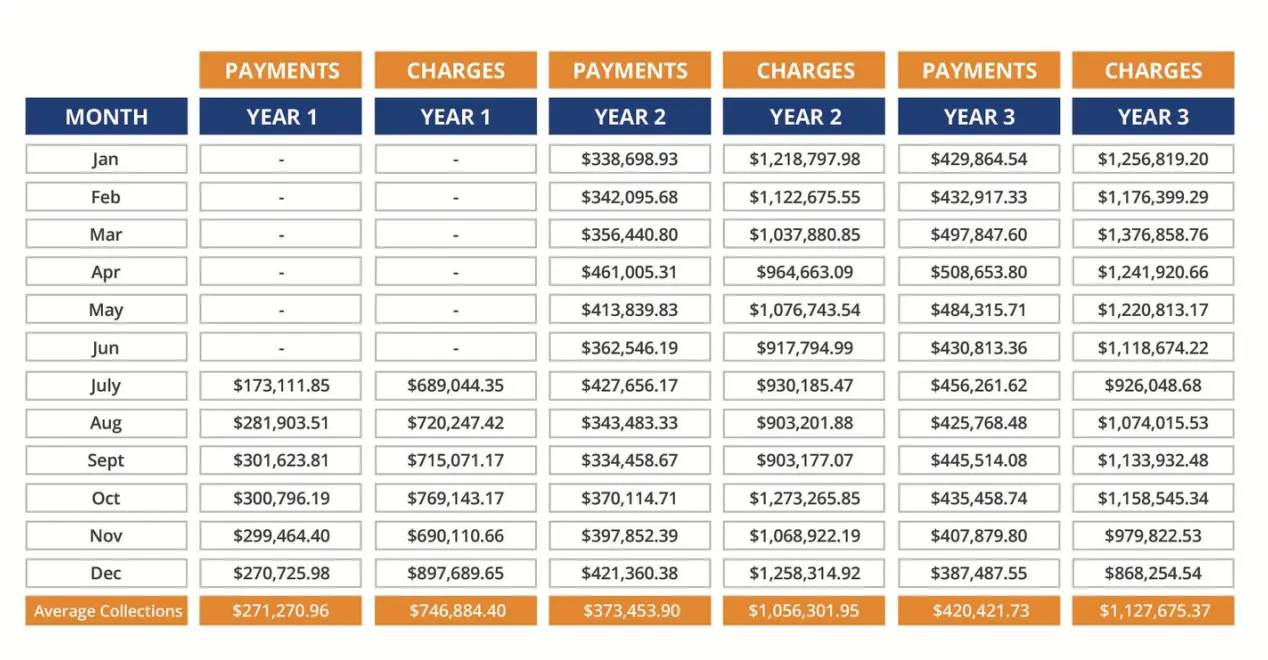
With this hands-on support, claims were submitted accurately from day one, denials decreased, and revenue was protected. The center experienced a seamless transition, showing how an experienced RCM partner can make a tangible difference while keeping the practice compliant with ever-changing regulations.
Stay Ahead of Medical Billing Changes with Synapse
Partnering with Synapse means more than just outsourcing billing—it’s about maximizing revenue, reducing denials, ensuring regulatory compliance, and gaining peace of mind. Our clients consistently see measurable results:
98% collection rate in the first six months
Average revenue increase of 15%
Trusted by over 1,000 providers nationwide
Tailor-made reporting dashboards designed for your practice
With Synapse’s expertise supporting your billing team, your practice can operate confidently, protect revenue, and stay ahead of industry changes, all while reducing administrative stress.
Sources:
Medical Practice Operating Costs Are Rising in 2025; Lifted from
https://www.mgma.com/mgma-stat/medical-practice-operating-costs-are-still-rising-in-2025-heres-how-to-control-them
2026 IPPS Final Rule Home Page; Lifted from
https://www.cms.gov/medicare/payment/prospective-payment-systems/acute-inpatient-pps/fy-2026-ipps-final-rule-home-page
RCM Statistics Overview; Lifted from
https://flobotics.io/blog/rcm-statistics-overview
Rising Denials and Payer Audits Intensify Financial Strain; Lifted from
https://www.hmpgloballearningnetwork.com/site/frmc/news/rising-denials-and-payer-audits-intensify-financial-strain-hospitals-2025
2025 Benchmark Report; Lifted from
https://mdaudit.com/resource/report/2025-benchmark-report/
Coding Issues; Lifted from
https://electronichealthreporter.com/mdaudits-2025-benchmark-report-reveals-ongoing-acceleration-of-payer-audits-troubling-rise-in-denials-and-outpatient-coding-issues/